

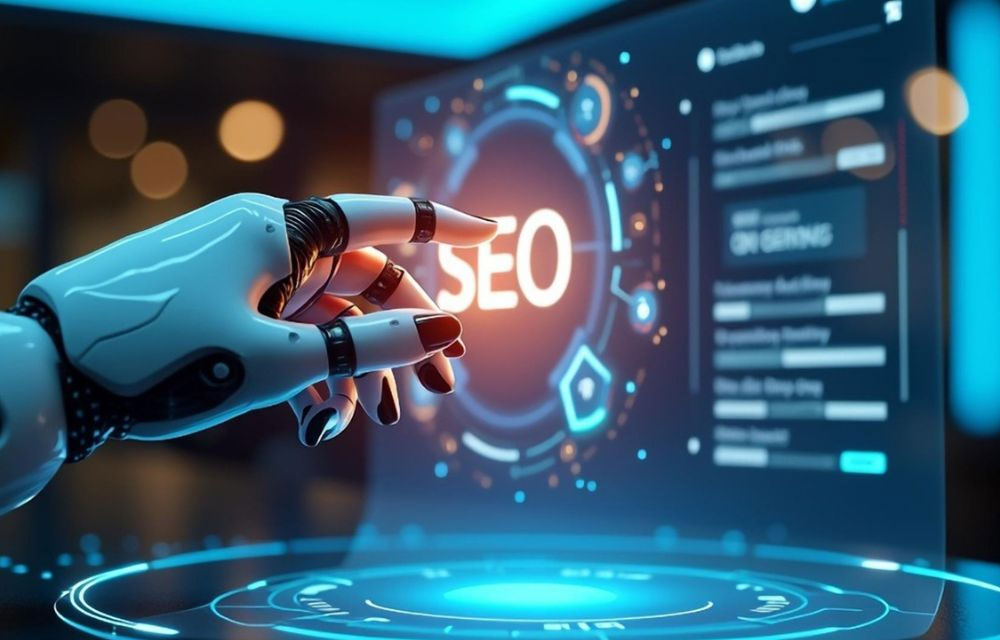
Introduction to AI in SEO
Search Engine Optimization (SEO) is no longer just about keywords and backlinks. In 2025, the landscape has shifted dramatically thanks to the integration of Artificial Intelligence (AI).
AI has become a transformative force—helping businesses analyze, optimize, and dominate search engine results pages (SERPs) with unprecedented precision.
From understanding search intent to real-time optimization and predictive content strategy, AI tools are redefining how businesses rank. As algorithms grow more sophisticated, those who fail to embrace AI-driven SEO solutions risk falling behind.
The Role of Natural Language Processing (NLP) in SEO
One of the biggest breakthroughs in AI and SEO is Natural Language Processing (NLP). NLP enables search engines to understand context and user intent—not just individual keywords.
Examples: Google’s BERT and MUM algorithms.
These tools help Google deliver more relevant results by analyzing language as humans do. For businesses, this means SEO must focus on semantic relevance, not just exact match keywords.
AI-driven NLP tools also help marketers analyze:
- Tone
- Sentiment
- Language complexity
This improves readability, user engagement, and ranking potential.
Predictive Search Analytics for Smarter Strategy
AI doesn’t just interpret current data—it predicts what users will search next.
Predictive search analytics help businesses:
- Align content with emerging trends
- Uncover future keyword opportunities
- Publish ahead of demand
This gives early movers a strategic SEO advantage.
AI-Powered Content Creation and Optimization
Content is still king—but AI is now your co-writer.
Tools like Jasper (formerly Jarvis) generate human-like content using machine learning, making it easier to scale:
- Blog posts
- Product descriptions
- Ad copy
AI can also automate SEO tasks like:
- Meta description generation
- Headline suggestions
- Keyword density optimization
AI-powered tools assess structure, readability, and engagement — ensuring your content is search-engine-friendly and user-focused.
AI Audit Tools Enhancing Technical SEO
Technical SEO is complex—AI makes it manageable.
Tools like SurferSEO analyze:
- On-page SEO elements
- Keyword usage
- Content structure
- Backlink profiles
AI also helps detect technical issues like:
- Broken links
- Slow-loading pages
- Indexing errors
With side-by-side comparisons of top-ranking content, you can fix gaps and improve faster.
Leveraging AI for Real-Time SEO Monitoring
AI enables a shift from reactive to proactive SEO.
With real-time monitoring, AI tools instantly detect:
- Drops in traffic
- Ranking changes
- Engagement fluctuations
AI-driven alerts help teams take immediate action—from updating content to fixing errors or adjusting strategy.
Advanced platforms can even automate fixes, streamlining SEO further.
Local SEO and Voice Search with AI
The rise of voice search has reshaped local SEO.
AI enables search engines to better understand conversational queries like:
“Best Italian restaurant near me”
“Where can I get a haircut in [city]?”
AI-driven tools optimize for:
- Local intent
- Voice-friendly content
- Hyperlocal targeting
Businesses using AI for local SEO are better positioned on mobile and smart devices.
AI and Semantic Search
Semantic search focuses on understanding meaning—not just words.
AI connects:
- Related topics
- Synonyms
- Entities
This encourages businesses to build topic clusters and use structured content.
AI tools help create:
- Internal linking strategies
- Contextually rich content
- Schema markup (automatically generated)
All boosting authority and relevance in the eyes of search engines.
Personalization and UX Powered by AI
AI tailors content for each visitor by analyzing:
- Behavior
- Location
- Device type
- Past interactions
This improves:
- Time on site
- CTR
- Bounce rates
- Conversion paths
Better User Experience (UX) equals better SEO performance.
Competitive Analysis and Market Trends via AI
AI tools analyze thousands of competitor pages in minutes, revealing:
- Winning keyword strategies
- High-authority backlinks
- Content gaps
- Emerging market trends
This gives your business a data-backed advantage to create more competitive content—and rank higher.
Case Study: How aiadboost.com Supports Better SEO Using AI Tools
aiadboost.com is a cutting-edge digital marketing platform leveraging AI to optimize SEO for clients.
It integrates:
- Content analyzers
- Real-time SEO monitoring
- Predictive analytics
And connects seamlessly with tools like Jasper and SurferSEO.
Clients report major improvements in:
- Keyword discovery
- Organic traffic
- Conversion rates
- Competitive rankings
Integration of AI SEO Tools into Your Marketing Stack
To maximize AI in SEO:
- Choose tools with API access, user-friendly dashboards, and platform compatibility
- Train teams to understand AI insights
- Blend automation with human strategy
Done right, AI SEO leads to a faster, more agile, and data-driven marketing engine.
The Future of AI in SEO
AI’s role in SEO will only expand. Expect:
- AI for image and video SEO
- Deeper personalization
- AI-generated site structures
- More semantic search capabilities
Search engines will rely more on AI to evaluate content. Staying ahead means continuous adaptation, learning, and innovation.
Ethical Considerations and Limitations of AI in SEO
AI is powerful—but not without risks:
- Overuse can lead to generic or spammy content
- Algorithmic bias may skew rankings
- Black-hat AI techniques (e.g., content spinning) can lead to penalties
Use AI ethically and in alignment with search engine guidelines.
Conclusion
AI in SEO is not just a future trend—it’s a present necessity.
From content creation to technical audits, real-time monitoring to predictive planning, AI empowers smarter, faster, and more scalable SEO.
Embrace platforms like Jasper, SurferSEO, and aiadboost.com to gain a significant competitive edge.
But remember—success lies in thoughtful implementation, ethical practices, and human creativity.
FAQs
What is the best AI tool for SEO?
Top tools include SurferSEO (optimization), Jasper (content creation), and aiadboost.com (all-in-one AI SEO platform).
Can AI completely automate SEO?
Not entirely. AI automates many tasks, but human strategy and creativity are still key.
How does AI improve keyword research?
AI analyzes vast datasets to uncover trends, intent, and competitive gaps, making keyword research faster and smarter.
Is AI SEO suitable for small businesses?
Yes! Many tools are affordable and scalable, making them perfect for growing brands.
How often should SEO strategies be updated when using AI?
Ideally, review and refine monthly to stay aligned with algorithm updates and user behavior shifts.